The Ripples We Make: The League of Stars Residency, Greece 2025
The Victoria line is one of London’s most frequently used tube routes. When it was first built in the 1960s, it was designed to carry approx. 24,000 passengers per hour in each direction, and it has since been upgraded to accommodate almost double that figure. But its improvements haven’t been able to keep up with efforts to cool the temperature; with the braking systems, mechanical traction, lighting, and body heat of its passengers all contributing to its ecosystem which can get to about 12°c above the average external temperature. The depth of the tunnels, being submerged in London clay, do not allow for heat to escape and thus 60 years of heat is being continually insulated in this underground tube.
Our view approaching Skroponeria on the journey from Athens
A far cry from the overcrowded tube journeys in London, I was lucky enough to spend a quiet week in rural Greece on The League of Stars Residency Program: my first residency. Having lived in the vicinity of London for my whole life, I am used to a fast pace, busy streets and struggling for a spot on a packed tube train. It’s not often that I am granted the time to be alone with my thoughts, away from deadlines or the need to be somewhere in a rush.
So when Luz, the program’s facilitator, told us that our time was our own to do with as we pleased, I must admit I felt a bit lost. I was in the midst of researching my dissertation topic, so I thought I should definitely be doing some reading. I’d planned for it and printed out some chapters of academic journals to enjoy on the beach. But the serenity of the landscape I found myself in commanded that I put it all down, and I was compelled to listen.
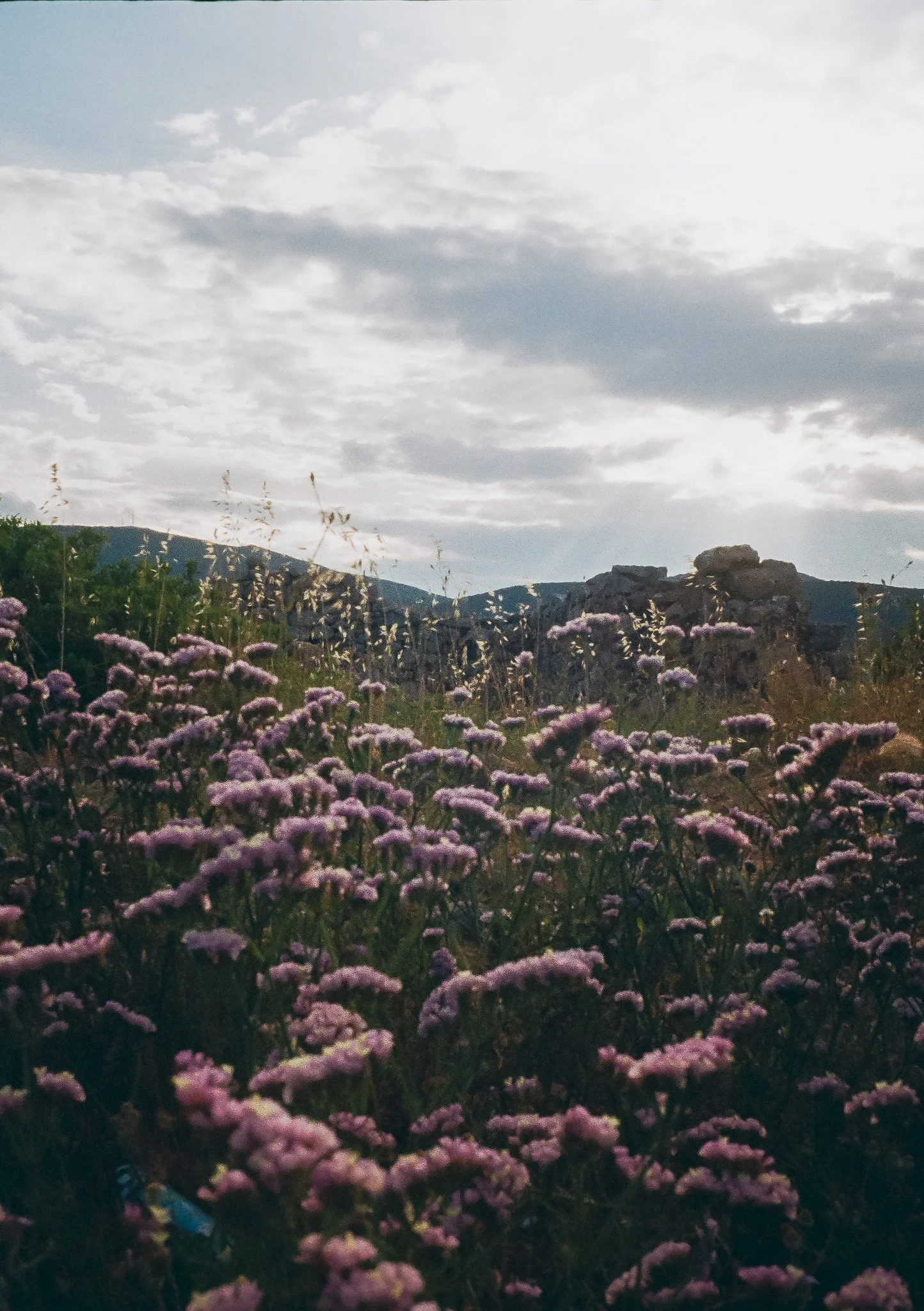
The residency was nestled in a hillside in Skroponeria, about 90 minutes drive from Athens. The first thing that struck me on our journey from the airport (or perhaps the second, after the grumpy Greek man shooing us out of the airport carpark) was the sight of the dramatic uplands, pierced with wind turbines. The window from our van provided the perfect framing, and we all watched on in awe as if this was something fictional being presented to us on a screen. Upon arriving, it took me a while to appreciate that I was really there. Personally, it was a significant occasion, for being the first time I’d left the UK in more than 6 years.
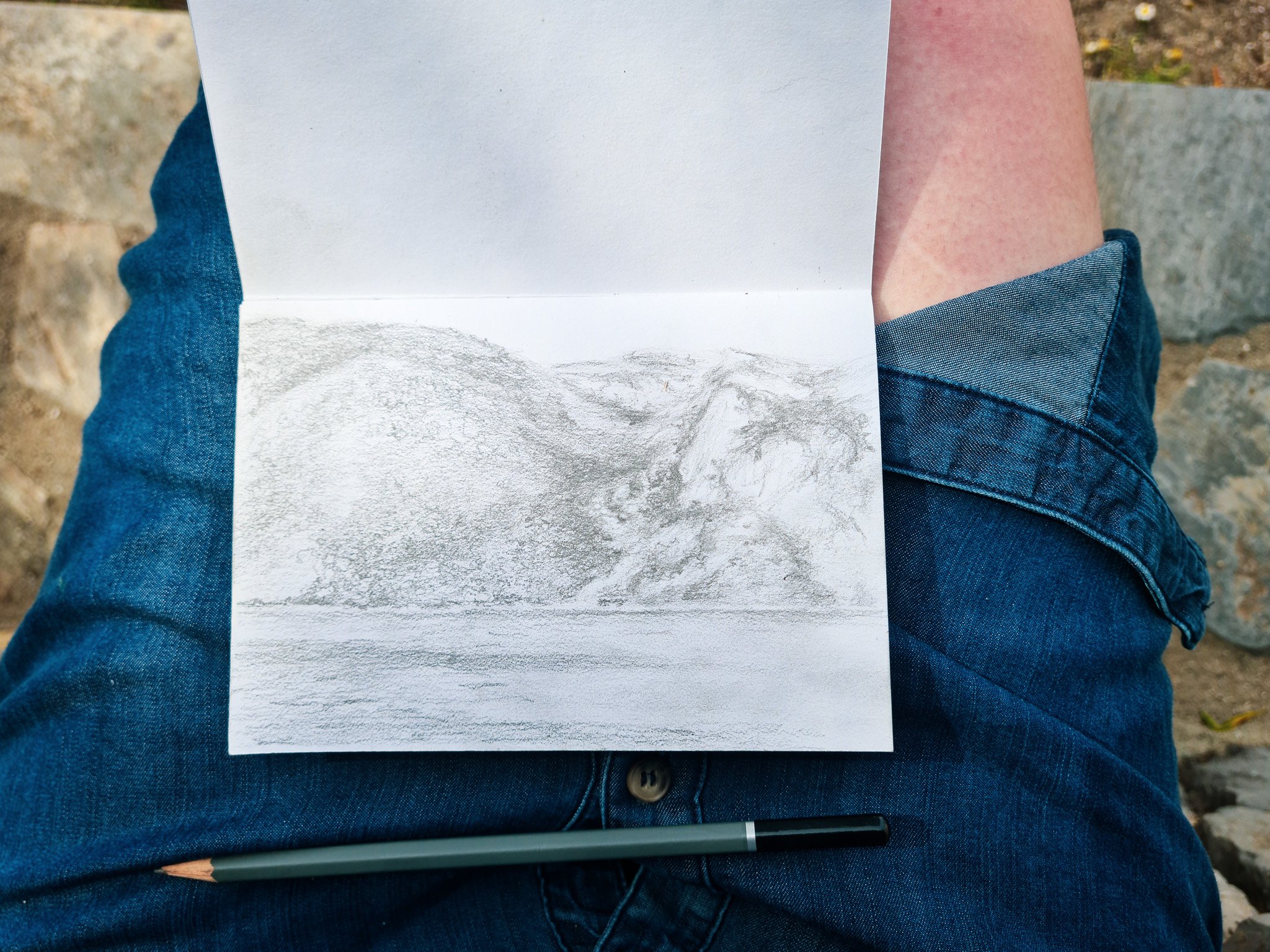
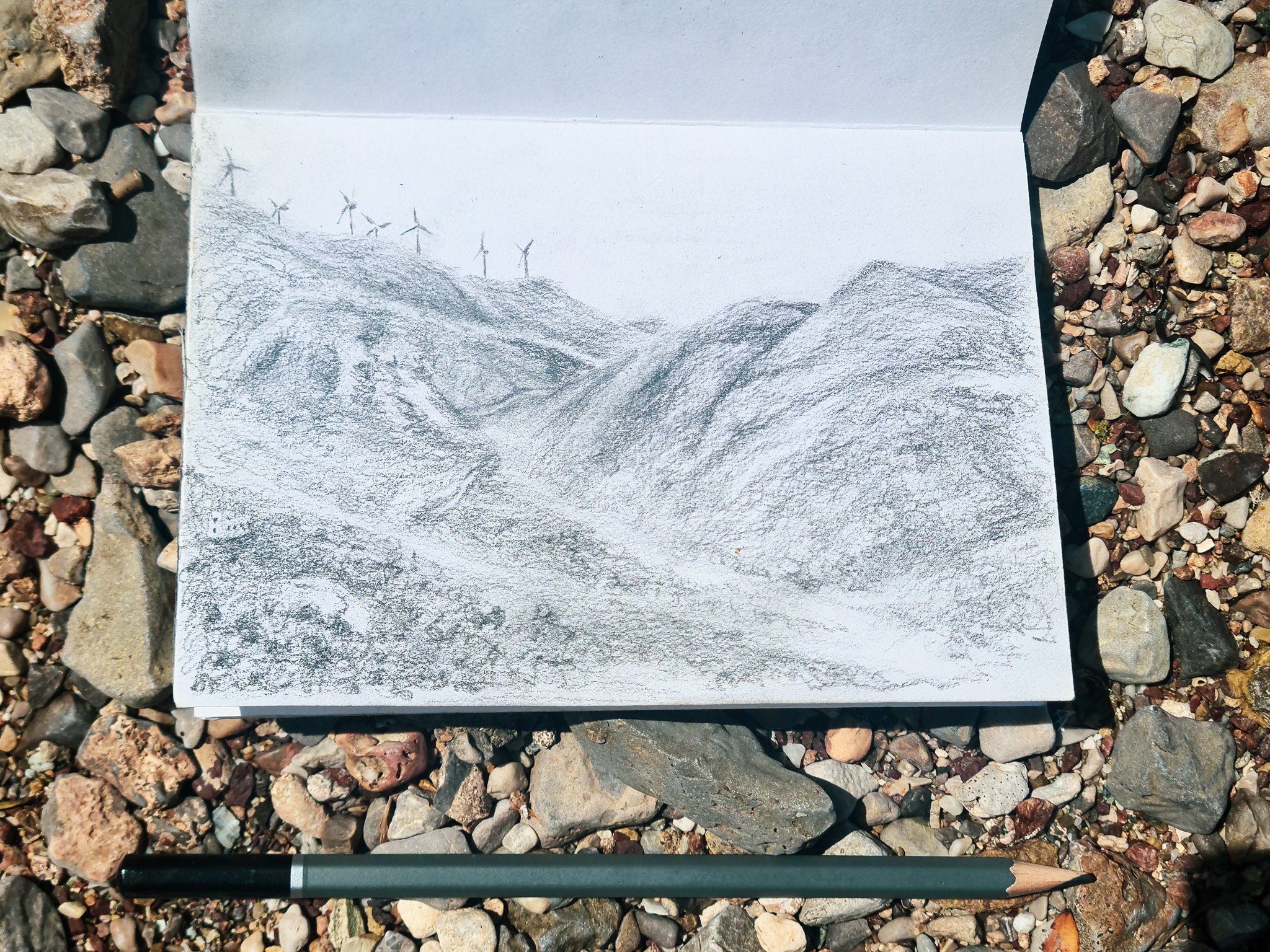
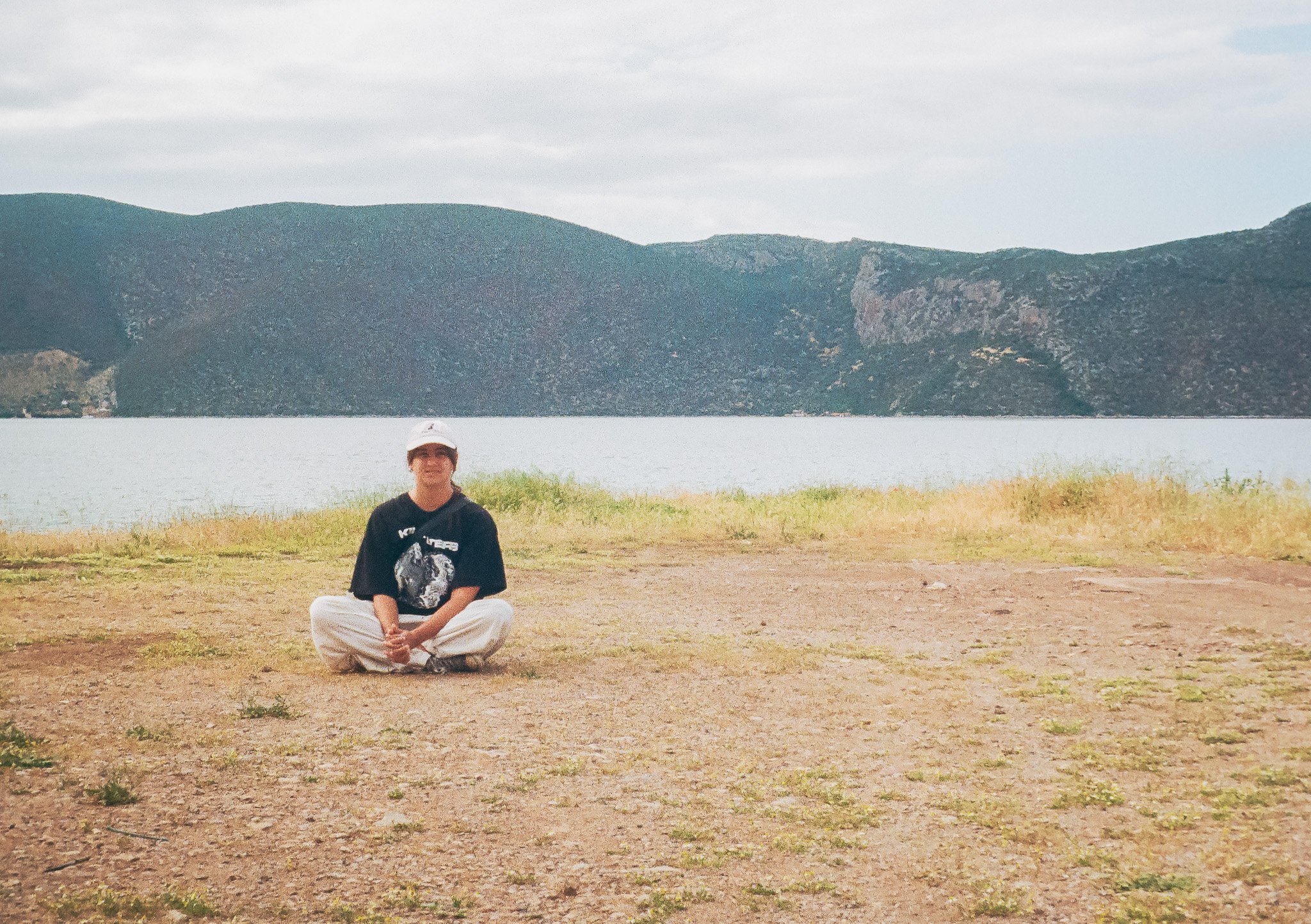
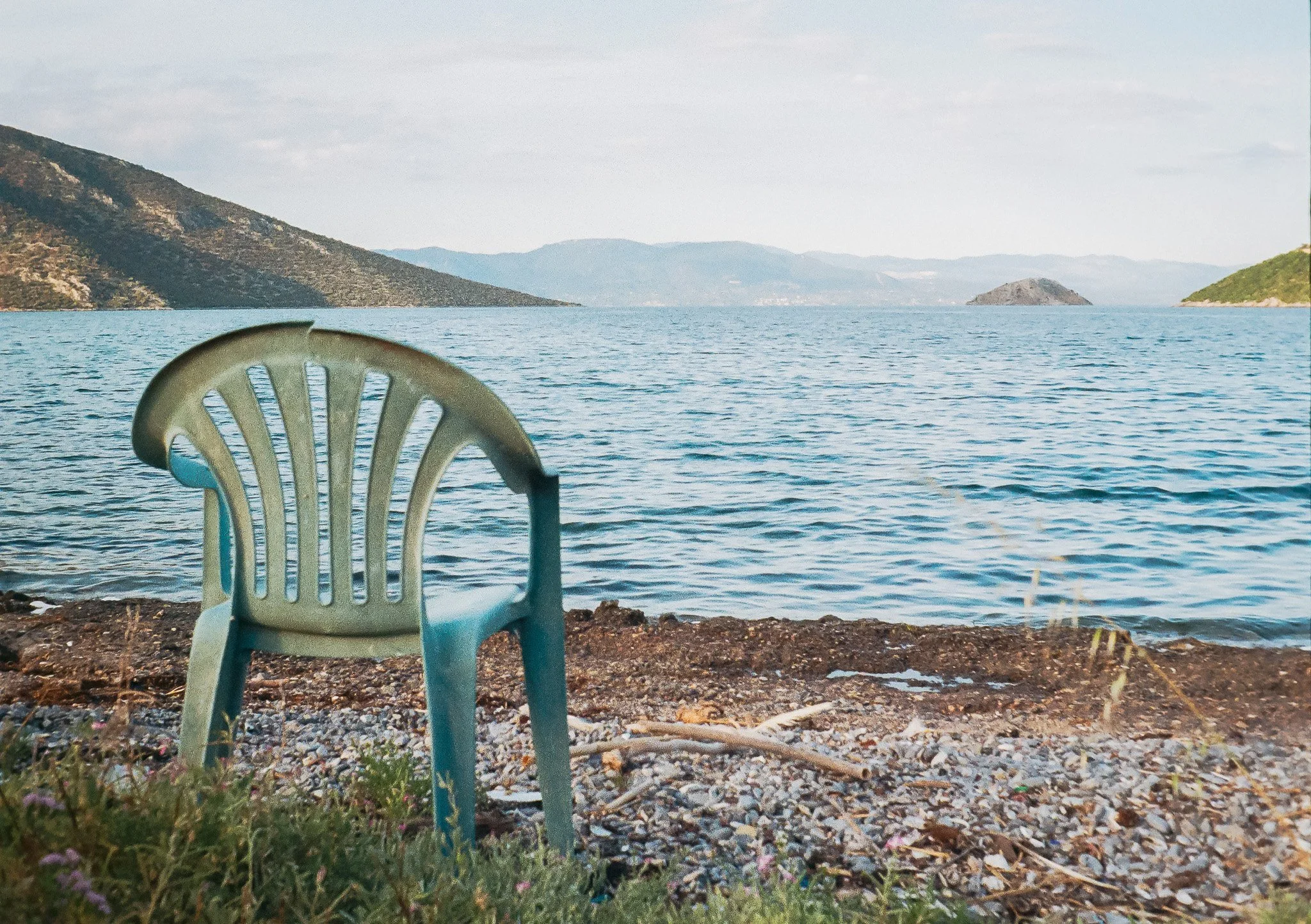
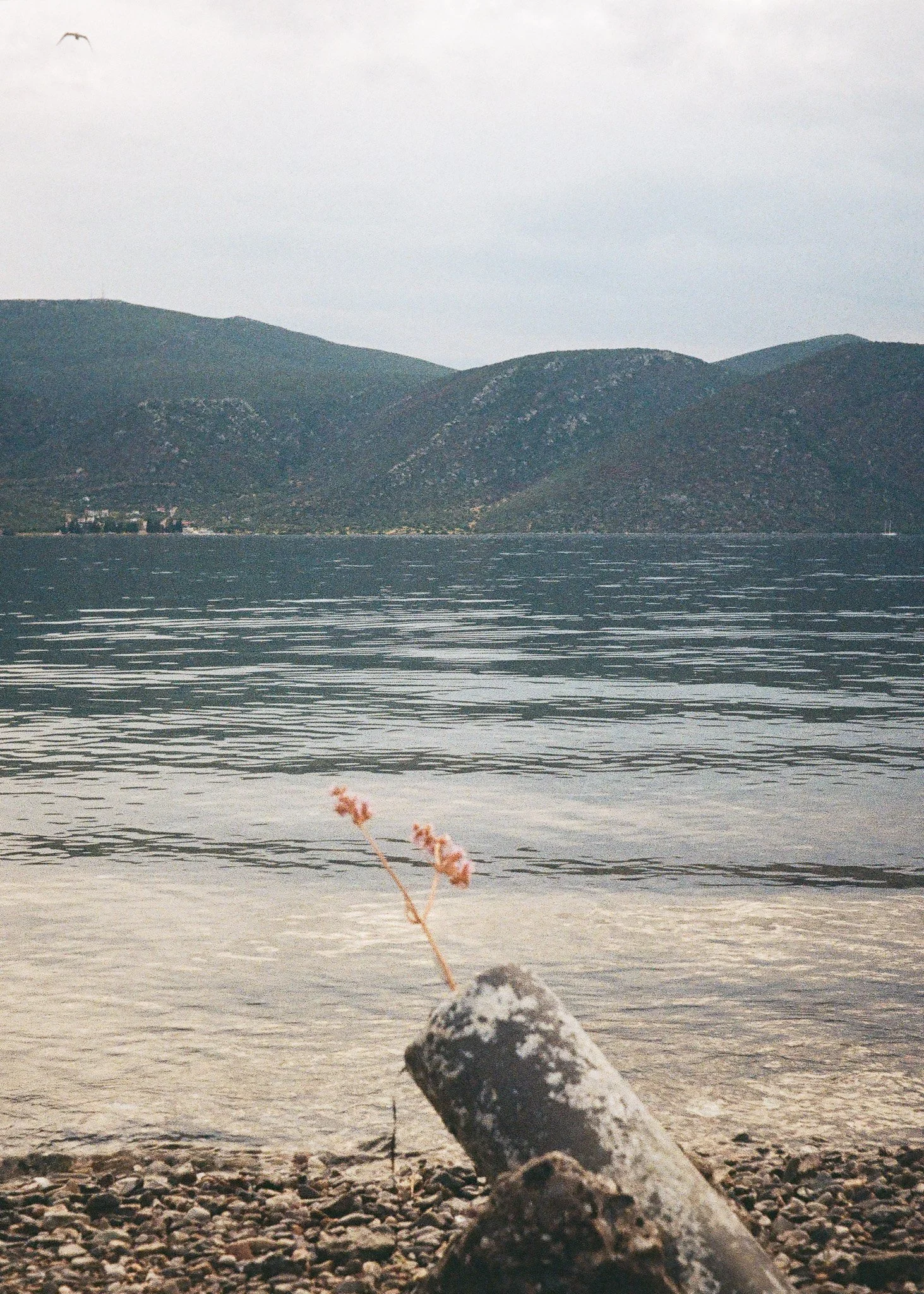
Very soon, though, I’d established my own routine, going down to the beach every morning after breakfast. They way the hills hugged the coastline, gave us our own little ecosystem, shielded from the wind and protected from the fuss of the wider world. At most, there was a gentle breeze. But you wouldn’t believe how still the sea was. It acted more like a lake or an artificial pool than how I know the sea to behave.
One morning, I put down my books, took off my sandals and entered the sea. The water had not seen any action for the entire night and was stiller than stone. My interruption caused ripples that went on and on as far as I could see. Every little move I made disturbed it further and I watched those wrinkles on the water’s surface, anticipating them to stop. I stayed as still as I could, but they didn’t cease. It was my heartbeat, and the pumping of blood around my body that kept those ripples going and going. Mechanisms in my body that I am hardly ever conscious of, having an effect on the huge body of water that I was only partially submerged in.
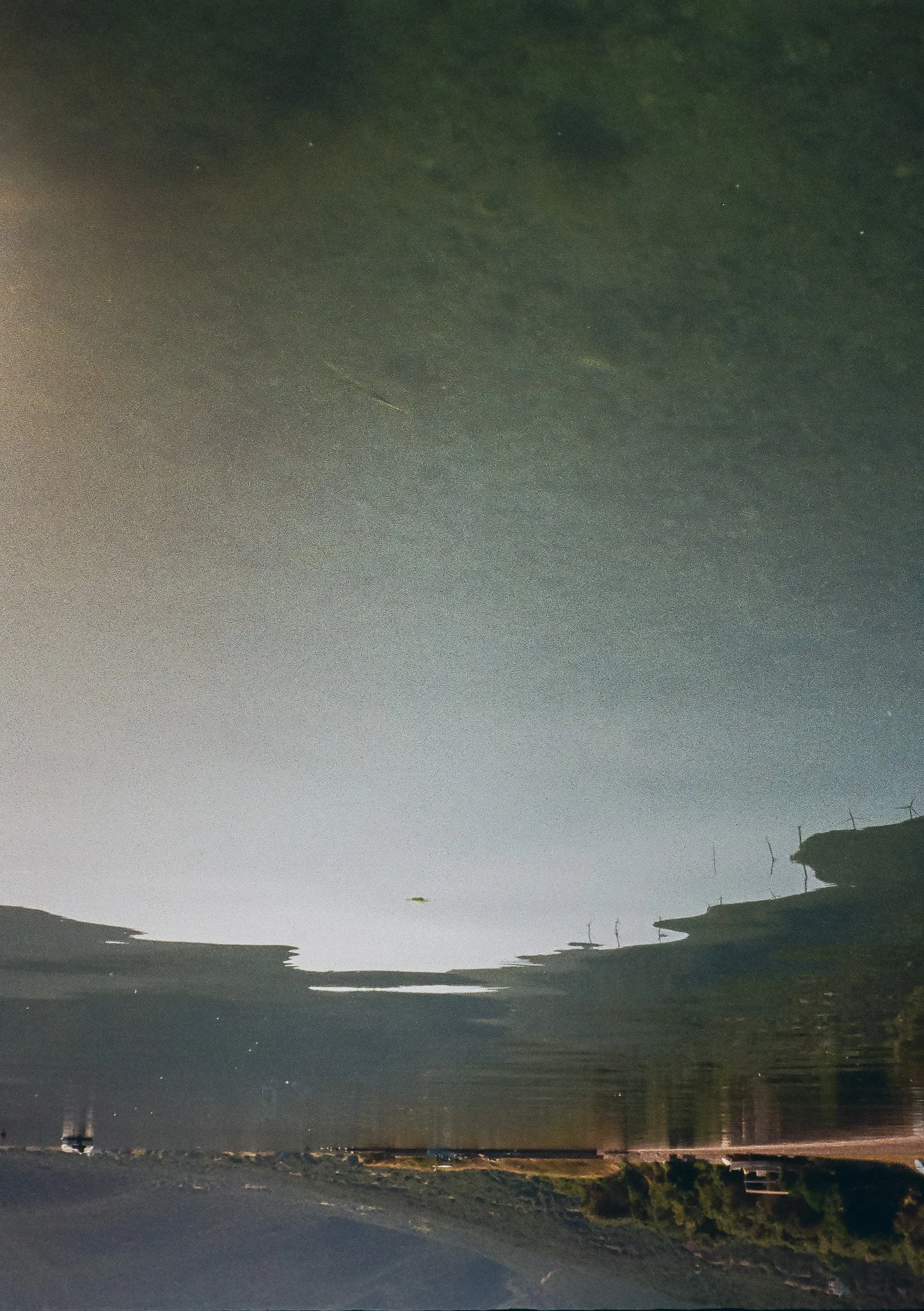
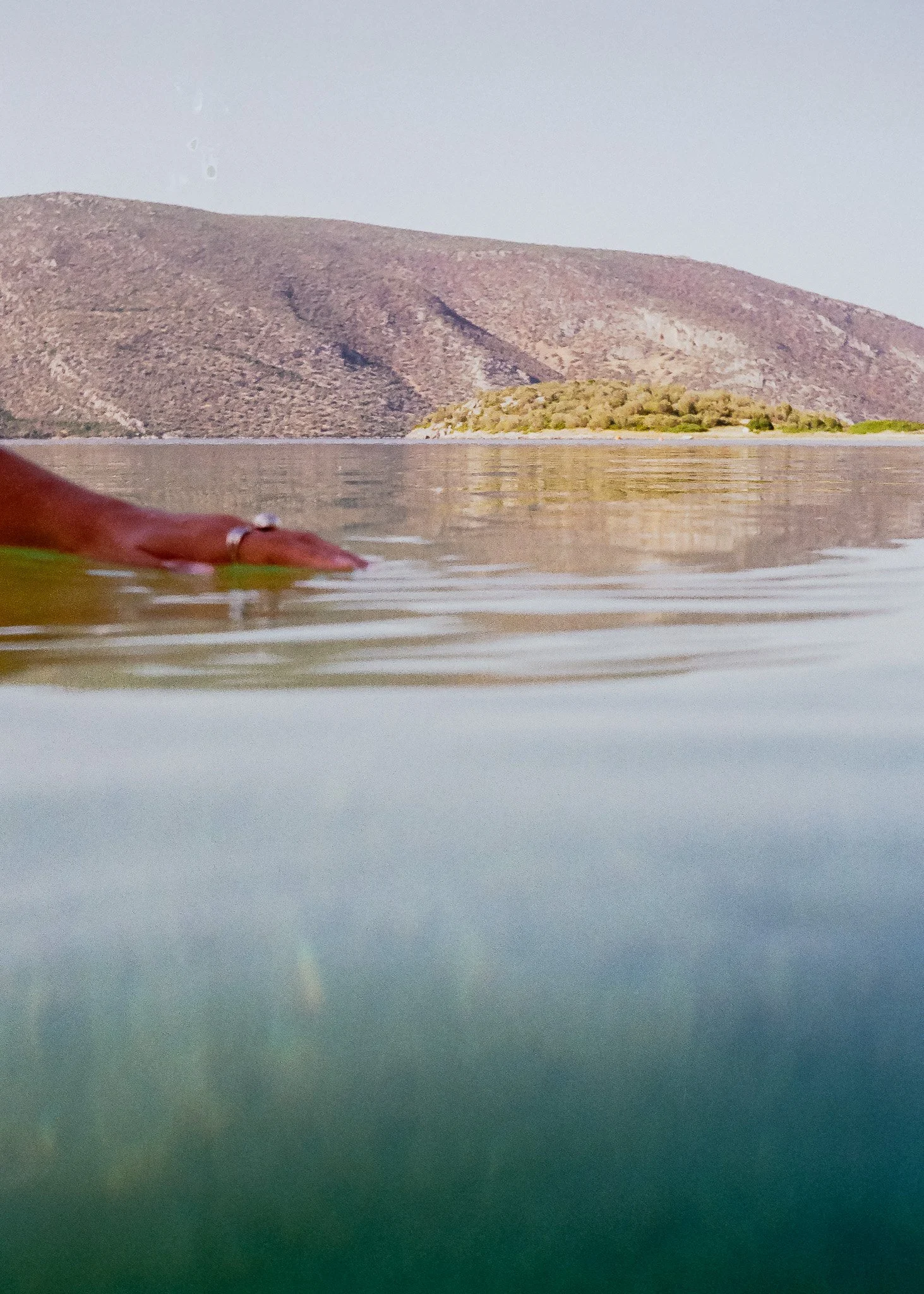
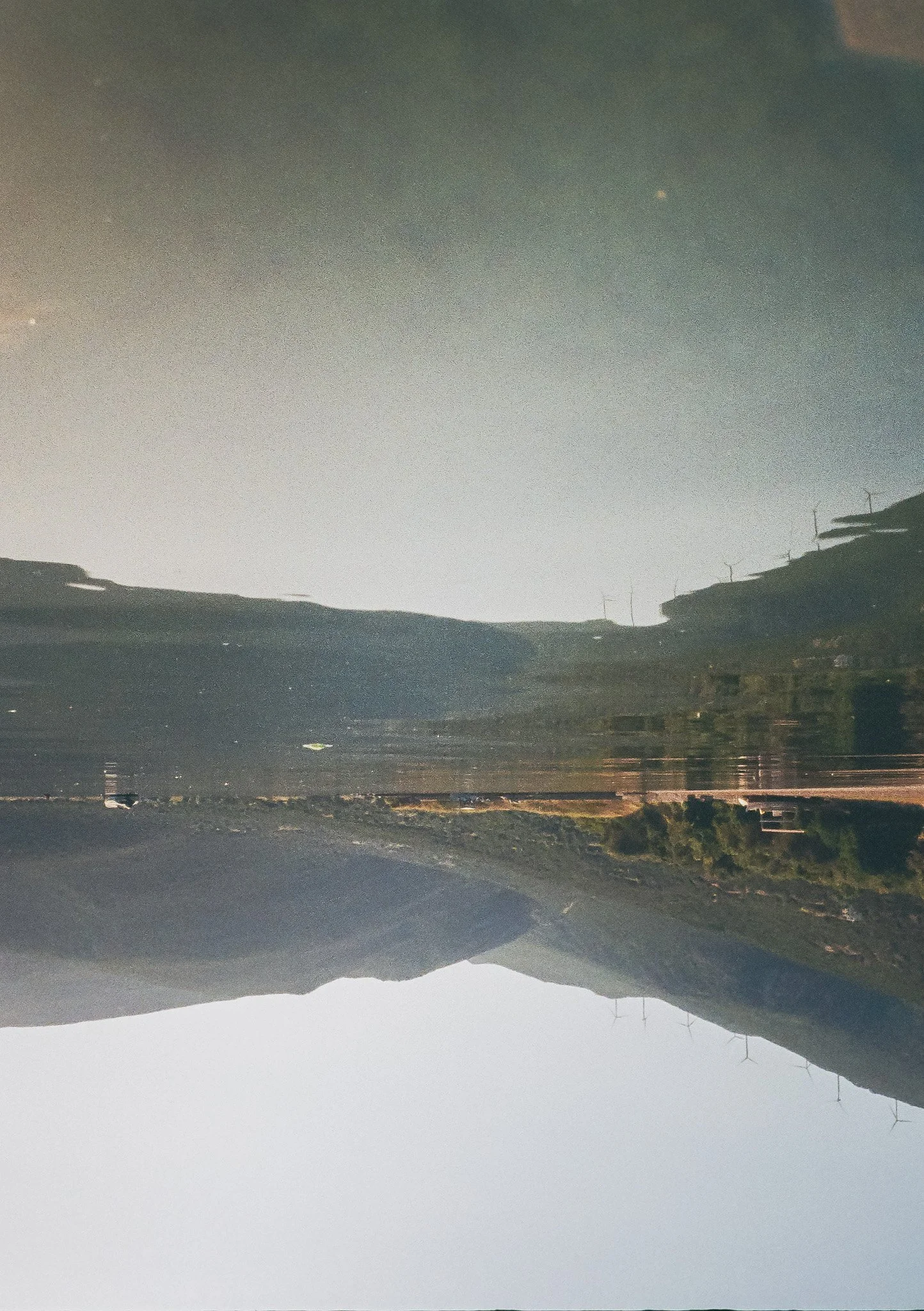
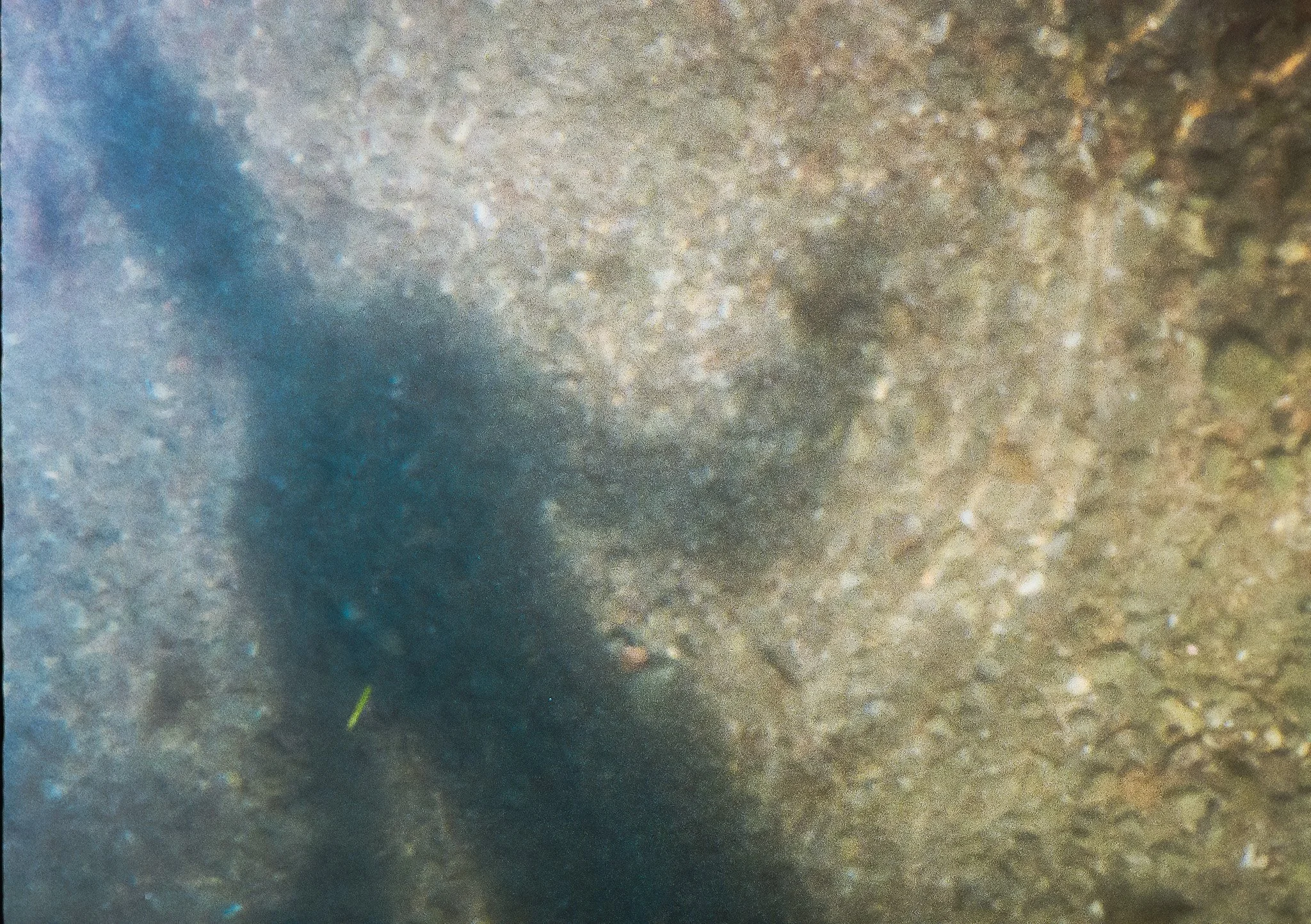
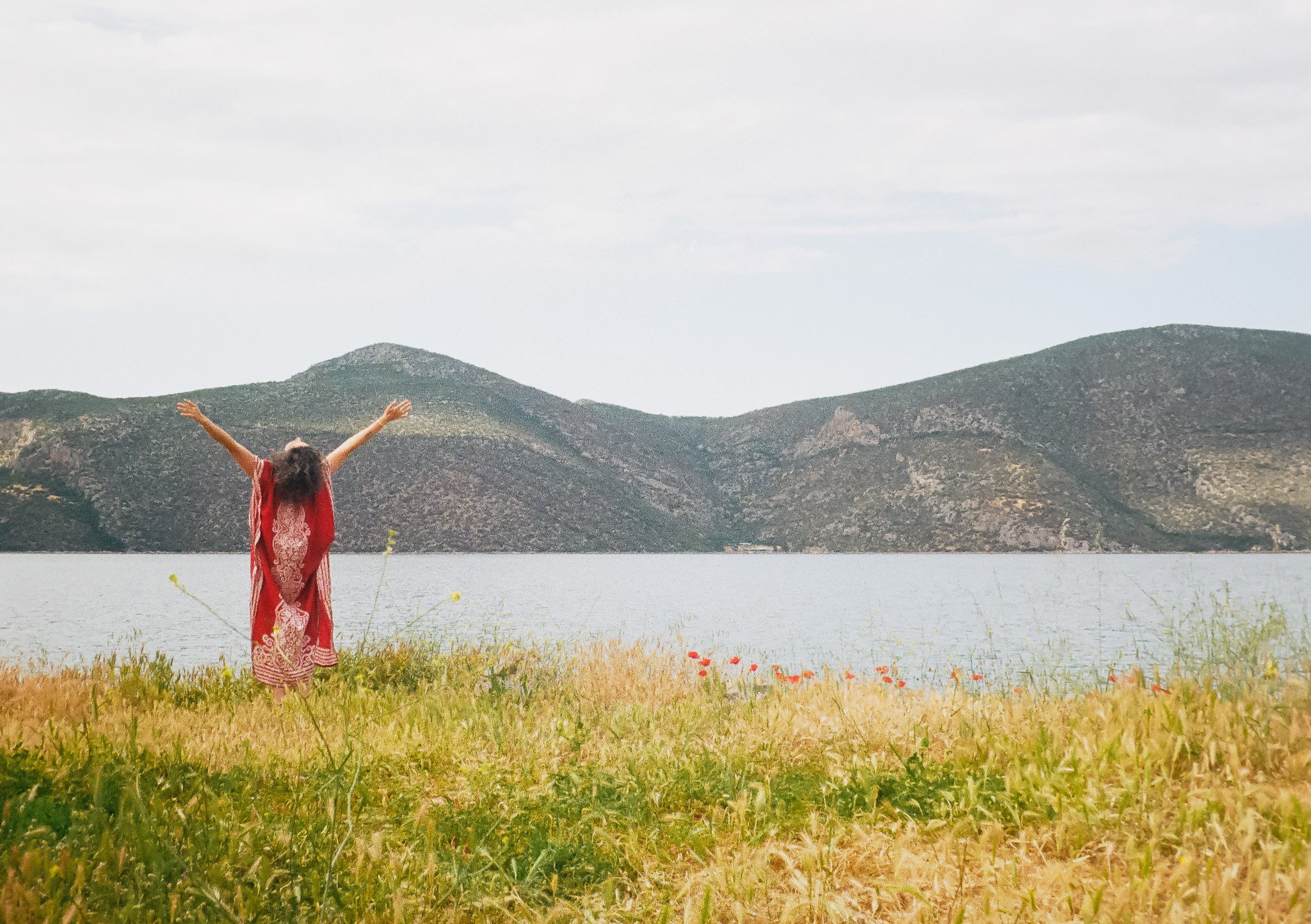
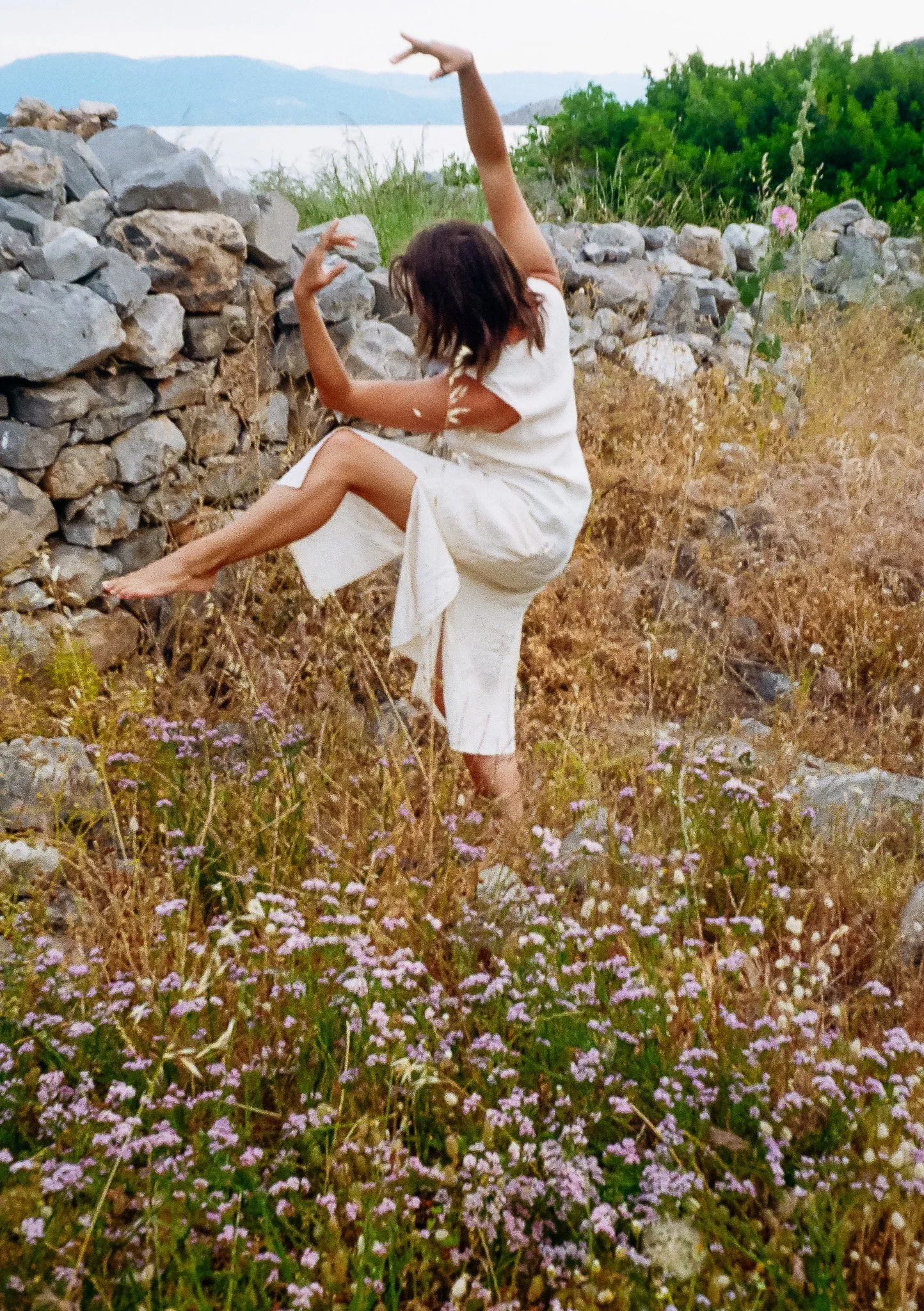
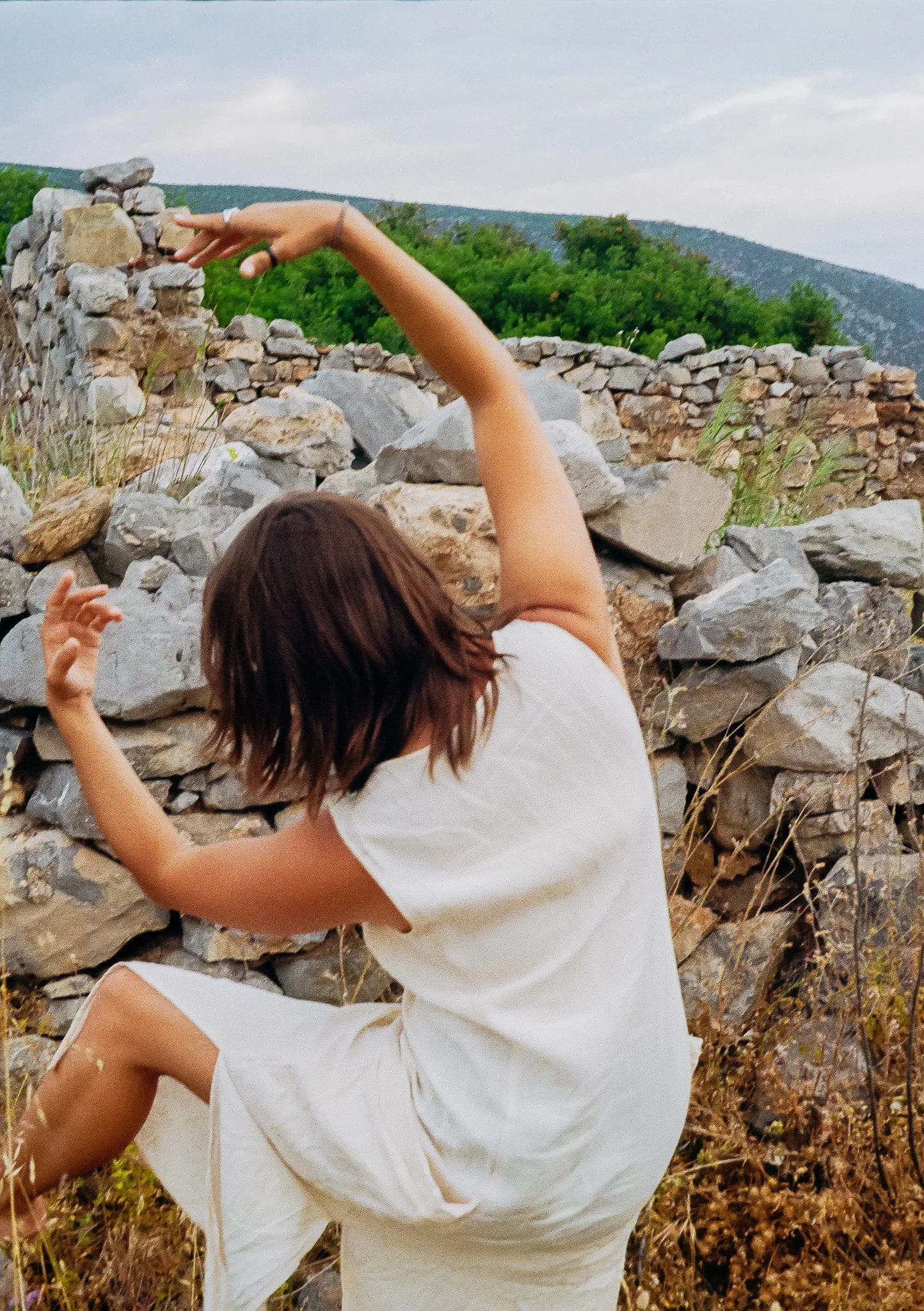
Katya Borkov making ripples
This was one of my biggest takeaways from the residency. In our daily lives, we rarely get to see how our presence makes a difference. Maybe the difference is so small that it seems insignificant. The body heat of those commuters on the Victoria Line contribute to about 3% of the heat which remains insulated in the tube tunnel. Maybe that’s not much, but it got me thinking about how all those tiny things add up and make a lasting impact. The butterfly effect is a well known phenomenon where small event can have exponentially growing knock on effects: the flap of a butterfly’s wings can, in theory, cause a tornado. Could the effect of my heartbeat on the calm water in Greece cause a sea storm elsewhere in the world? As someone with a strong interest in romantic art and literature, I’d certainly like to think I hold that kind of power. To see one’s own powerful and unwavering heartbeat pulsing in the ocean is surely a poet’s dream. I am my own Heathcliff, creating a tempest wherever I go. Storm was always my favourite X-(wo)man, but I am far from having lightning bolts shoot from my fingertips.
The reality may not as romantic or poetic as I might hope, but it does justify some thought. What imprints do we make on the world, visible or invisible? Physical or metaphysical?
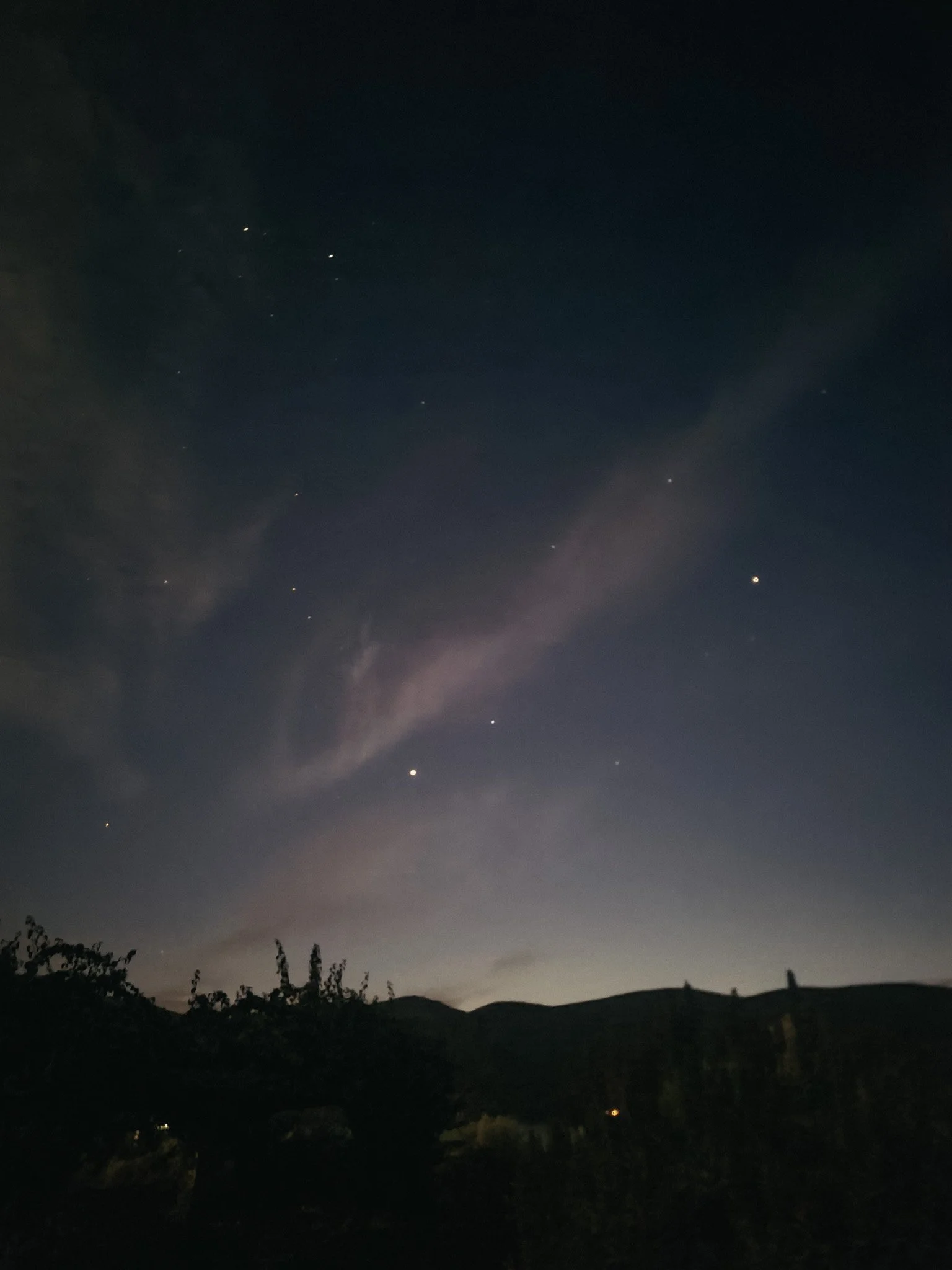
The Twins: Castor and Pollux in the night sky, also known as Gemini
This theme was explored further throughout our time there. The evenings were spent under the stars, with Luz bringing them to life and telling us of their mythologies. She introduced us to a belief system that the stars, many thousands of lightyears away can have bearing on our lives today and it became quickly very clear that over the centuries we, as humanity, have lost something of our cultural connection to the stars.
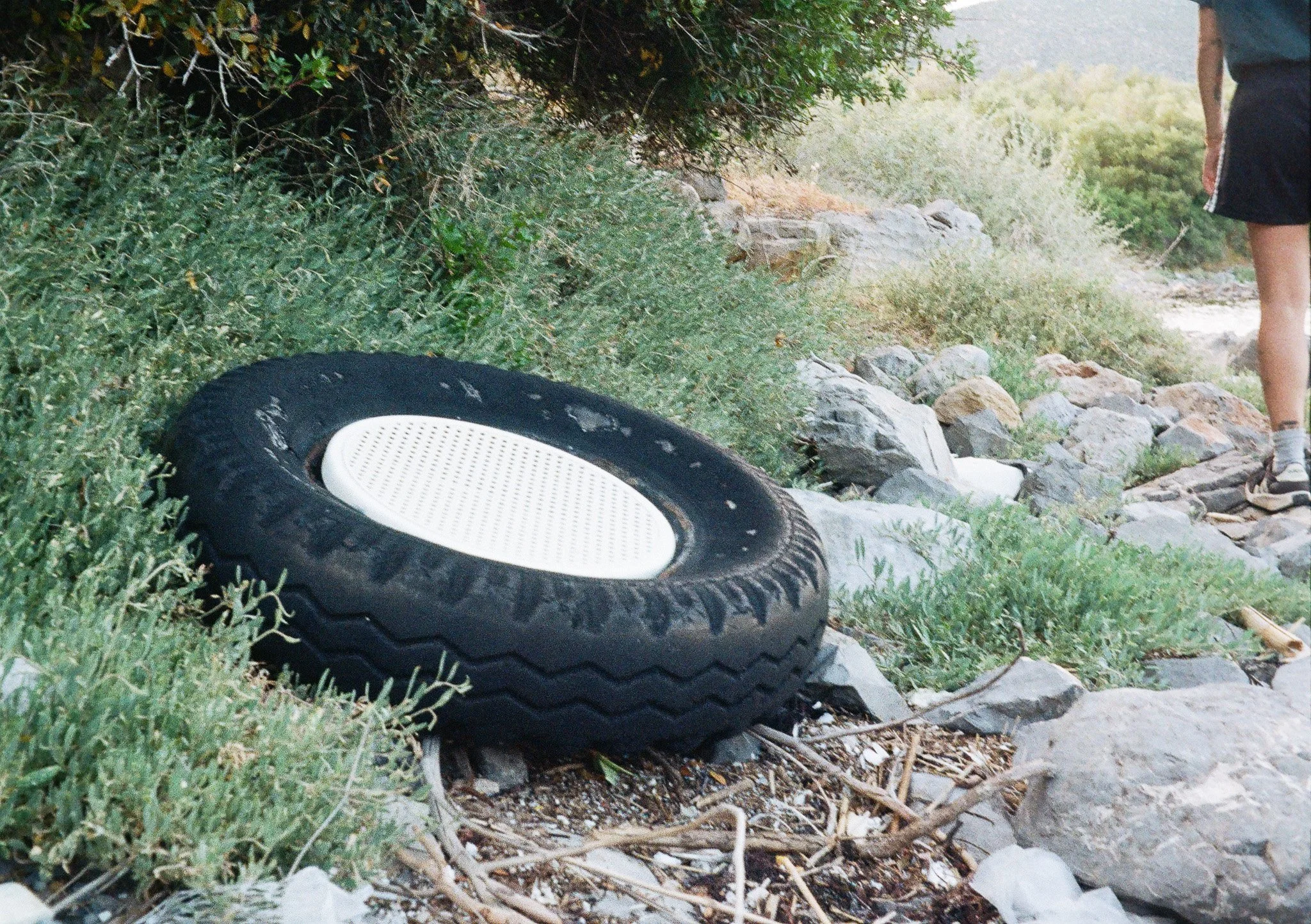
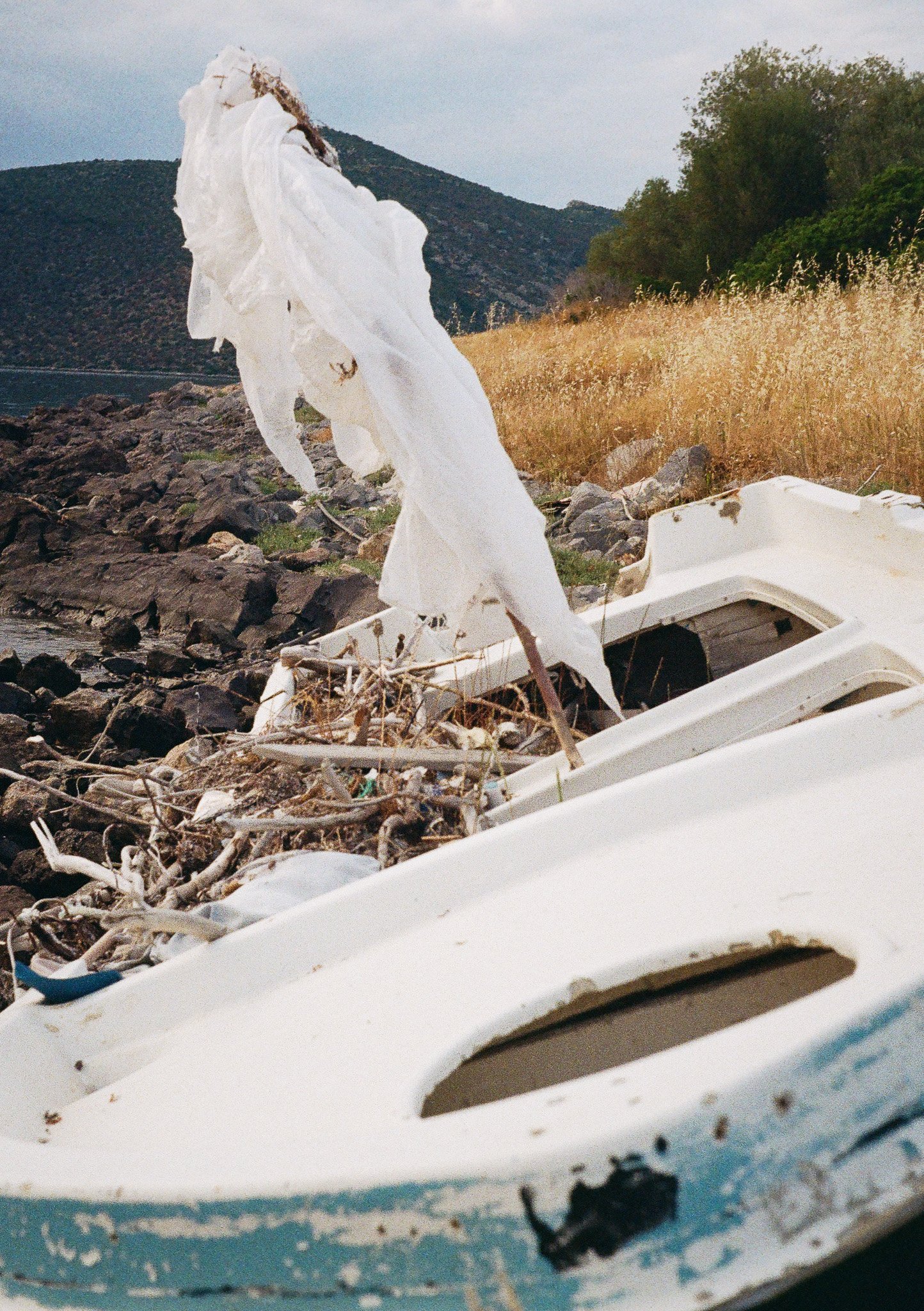
We spent evenings discussing our personal experiences and how it resonated with us, and explored it through writing and performance workshops lead by Katya Borkov, Lila Lakehal and Stefanie Wenner. We talked among the olive groves, performed our own ‘cosmic opera’ on the beach at sunset, and wrote letters to our future selves. There was even a chance to learn of the healing and medicinal properties of the local plants, lead by Carolina Brooks. Not to mention the incredible food, so thoughtfully prepared each afternoon and evening by Nahuel and Carla. On our final evening, Celestino Marco Cavalli and Flavia Mar, led us on a tour showing the land art they had made around the coastline.
This residency was an experience I will never forget, and our experiences there in Greece (as well as others’ in Egypt) will culminate this June in a group exhibition: The Archive of the Stars in Berlin.